
Start with the question to be checked
Do not send only the final paragraph asking for it to be confirmed or refuted. Briefly describe the report received, the question raising doubt and where it appears in the materials. For example, identify the finding number, examination-section page and appendix you believe conflicts with it. These references separate document checking from assumptions about the event.
State why analysis is needed: to understand the report, prepare questions or obtain a written review. These involve different scopes of work. You need not select the exact service name beforehand: describe the result needed and available set of materials.
Retain the report with its appendices
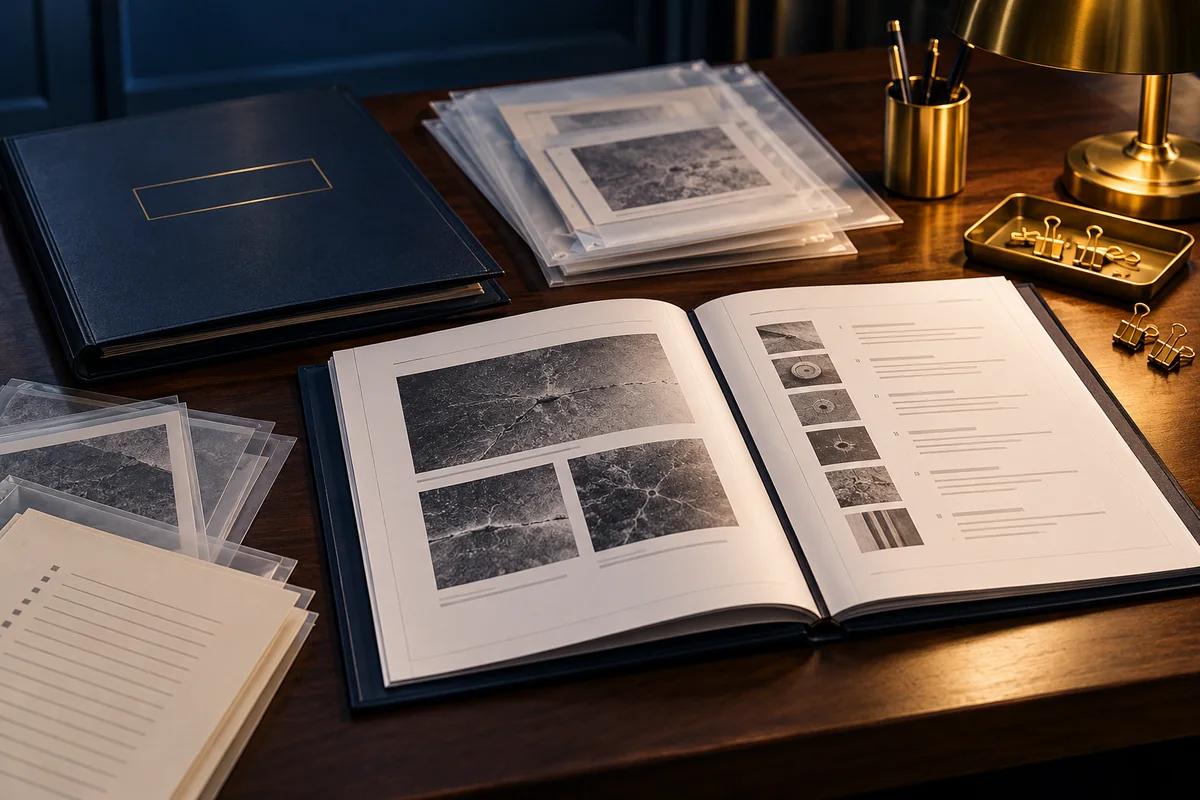
Provide a readable copy of the entire document: title details, questions asked, list of materials received, examination description and findings. Retain page numbering and appendix order. If the text refers to a photographic table, diagram, observation table or another document, that material must be available for checking or listed in the inventory as missing.
- List the appendices you have separately.
- State if the copy lacks colour images or individual pages.
- Do not replace the original file with a paraphrase, extracts or screenshots of selected passages.
Relate object numbers to documents
Check whether objects are identified consistently in the list, main text, image captions and findings. Send available records explaining those identifiers. For preliminary analysis, identifying a discrepancy is sufficient; do not independently rename objects within the report copy. If the document has several versions, retain each separately and explain their known receipt sequence.
Documentary analysis must distinguish materials supplied to the original expert from information that appeared later. This allows assessment of the report in the actual circumstances of its preparation.
Separate case documents from your explanations
Send the appointment decision or order, revised questions, records and other available documents as separate files. Label your own chronology and observations as the applicant's explanations. This prevents a retelling from being mistaken for a primary source and allows every assertion to be checked against a particular document.
| Material | What to include in the inventory |
|---|---|
| Report | Number, date, page and appendix counts |
| Photographic table | Which report it accompanies and whether numbering is retained |
| Applicant's observations | Finding number to be checked and page reference |
Prepare a convenient electronic copy
Check small captions' legibility and page completeness. If the original PDF is available, retain it; recognised text can be supplied additionally for searching. Do not replace the original copy with a contrast-enhanced file, added elements or an altered image. Where information is redacted for a justified reason, mark the presence of the redacted passage: it may affect the possibility of analysis.
A filename can usefully include document type, date and number. Prepare a brief inventory and separately list missing appendices. Do not combine different reports in one file without separators.
Send information, not dangerous objects
The website form accepts a description, documents and existing images. Do not send firearms, ammunition, other dangerous objects or their fragments through the website's contact channels. Do not act independently on an object to obtain new materials. If a task requires access to a physical object, authorised specialists determine the working procedure under the appropriate conditions.
Before transferring files, check the lawful basis for supplying them and the personal data included. For an initial discussion, a complete document relevant to the task is usually more useful than a large archive of unselected correspondence.
What preliminary analysis produces
First establish whether the set is sufficient for the question and what specialist knowledge is needed. The review subject, findings to be checked and result format can then be agreed. Guesses do not replace missing documents. If a significant basis of a finding is unavailable, this limitation must be identified before work or reflected in the result.
Documentary analysis is not a new examination of firearms or gunshot traces. Its practical purpose is to make observations verifiable: show which finding is disputed, what material supports it and what specifically needs explanation.
If there are several observations, arrange them in the report's finding order. Give the document reference first and your explanation second. Do not combine independent questions in one line: separate entries help check each argument and retain its relevant appendices.